
Carpet guide
Carpet pile types, explained.
Choosing a carpet can make your head spin — so many fibres, styles and designs. The pile (how the yarn is cut and set) is what decides how it looks, how it wears, and how it's best cleaned. Here's every common type, in plain English.
In short
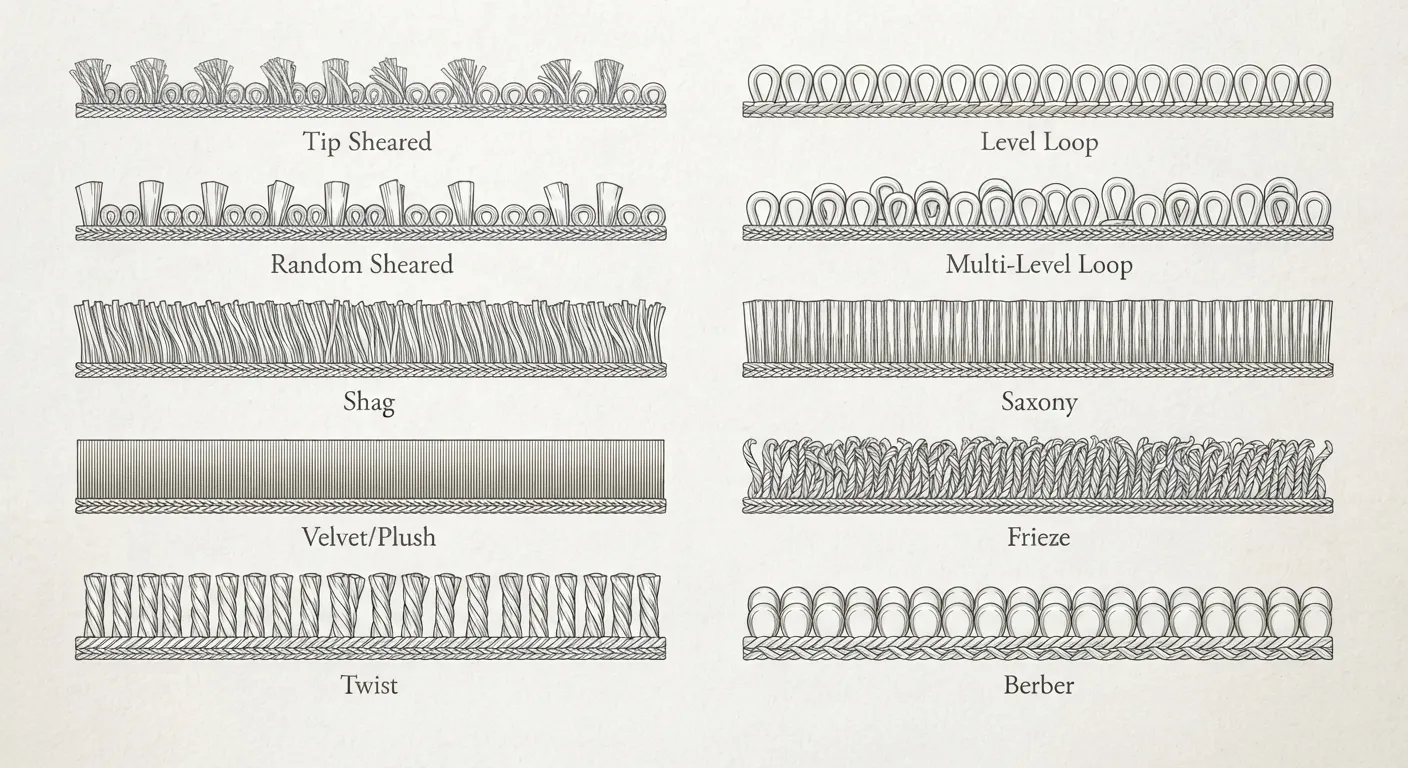
Carpet pile falls into three families. Cut pile (Saxony, velvet/plush, frieze, shag) has the yarn loops cut for a soft, upright surface. Loop pile (level loop, multilevel loop) leaves the loops uncut for hard-wearing durability. Cut-and-loop mixes both to create texture and pattern. Which you have changes how it should be cleaned — dense Saxony takes a full clean, while a delicate plush needs a gentler, lower-heat touch.
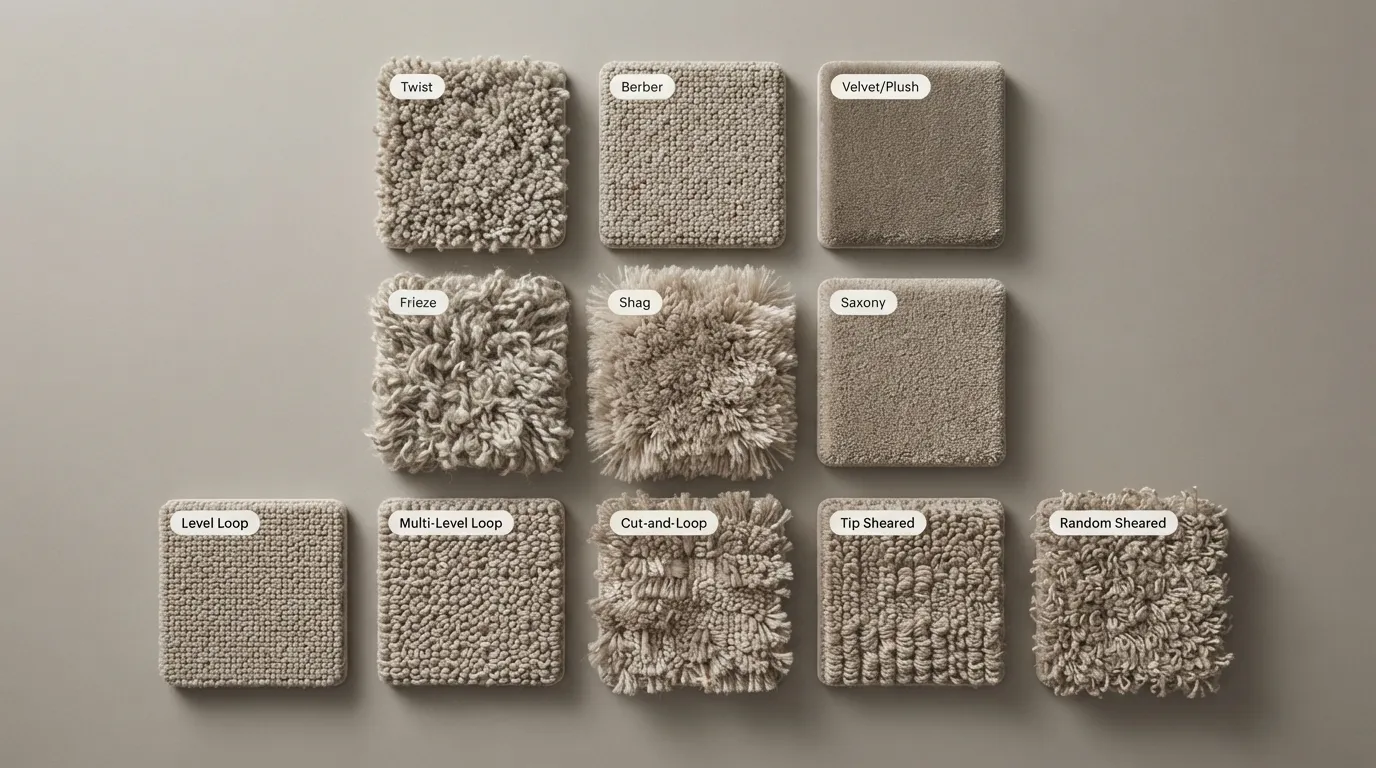
Cut-pile designs
The loops are sheared so the yarn tips stand free — the soft, familiar carpet underfoot. How tightly the yarn is twisted and how densely it's packed decides how well it hides wear.
Saxony
Twisted, heat-set yarns with enough bulk to stand upright against foot traffic, at a pile height around a third of an inch. It's the classic plush-underfoot look — the bulk of quality residential carpet is Saxony. Dense and hard-wearing, though it shows footprints and vacuum marks.
Velvet / plush
Dense, with little or no twist in the face yarns, giving a smooth, uniform, almost velvet surface. It looks luxurious but shows every mark and footprint — and the fibres can distort under high heat, so it's cleaned at a lower temperature than a hardy Saxony.
Frieze
Very tightly twisted yarns that curl slightly at the tip, giving a textured, informal look. That twist is practical: frieze hides footprints and traffic marks well, which makes it a favourite for busy living areas.
Shag
A long pile — over an inch — with low density, so it lies casually rather than standing up. Rare now (its heyday was the seventies), but some endure. Because the fibres lie over, the sides wear rather than the tips.
Splush (short- or mini-shag)
A halfway house between shag and plush, usually under an inch. Denser than a shag but still too soft to stand fully upright, so it keeps that relaxed, random-lay look.
Grass-pile
Usually slit-film olefin made to mimic the look of grass, in a range of colours — an outdoor/novelty style rather than a lounge carpet.
Loop-pile designs
The yarn stays looped and uncut. Lower and denser than cut pile, it stands up to heavy traffic — which is why you'll see it in offices and hallways.
Level loop
Uniform, uncut loops all the same height. High density over a low pile makes it tough and easy to walk on, which is why it's the go-to for commercial-grade carpet.
Multilevel loop
Also called 'high–low'. Varying the yarn tension while tufting creates loops of different heights, building subtle patterns and texture into the surface.
Cut-and-loop designs
A mix of cut and looped yarns in the same carpet, used to build texture, contrast and pattern into the surface.
Sculptured Saxony
Longer cut-pile Saxony yarns set against shorter, uncut loops — the contrast in texture is what gives it its sculpted look.
Sculptured shag
Similar idea to sculptured Saxony but built on a taller, less-dense shag pile, with lower loops left uncut for contrast.
Level cut-loop
Cut and looped yarns at the same height, arranged to form a wide range of patterns and designs across the surface.
What your pile means for cleaning
The pile isn't just a style choice — it changes the right way to clean. A dense, hardy Saxony or level loop takes a full steam extraction in its stride. A soft velvet or plush can distort under high heat, so we drop the temperature to protect the fibre. A twisted frieze hides marks but can hold soil deep in the twist, and loop piles can wick a spill back up as they dry if they're over-wet.
That's exactly why we read the pile before we start — matching the heat, moisture and method to your carpet rather than blasting everything the same way. It's the difference between a clean that lasts and a carpet that's been worn out by the wrong approach.