
The choice they had been given
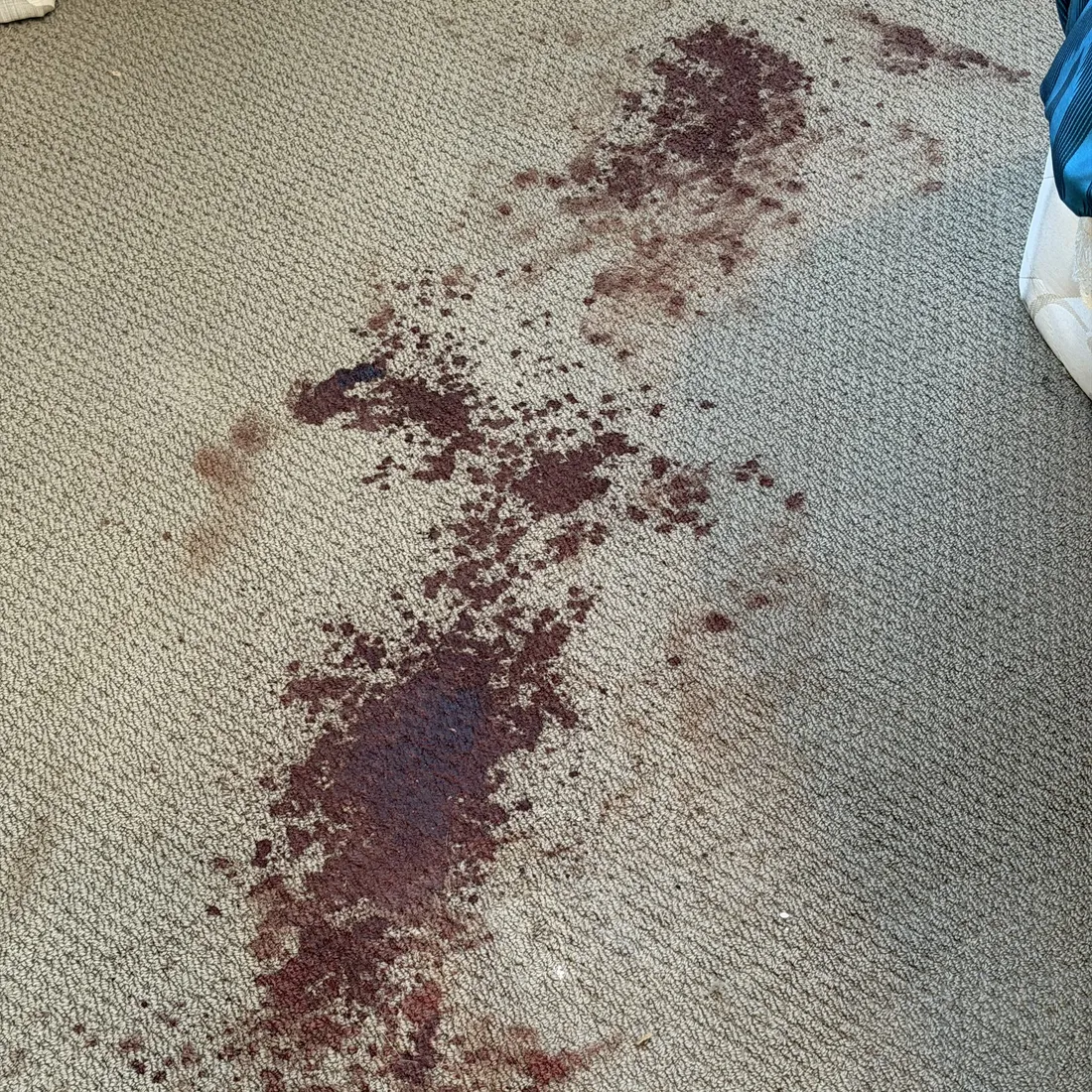
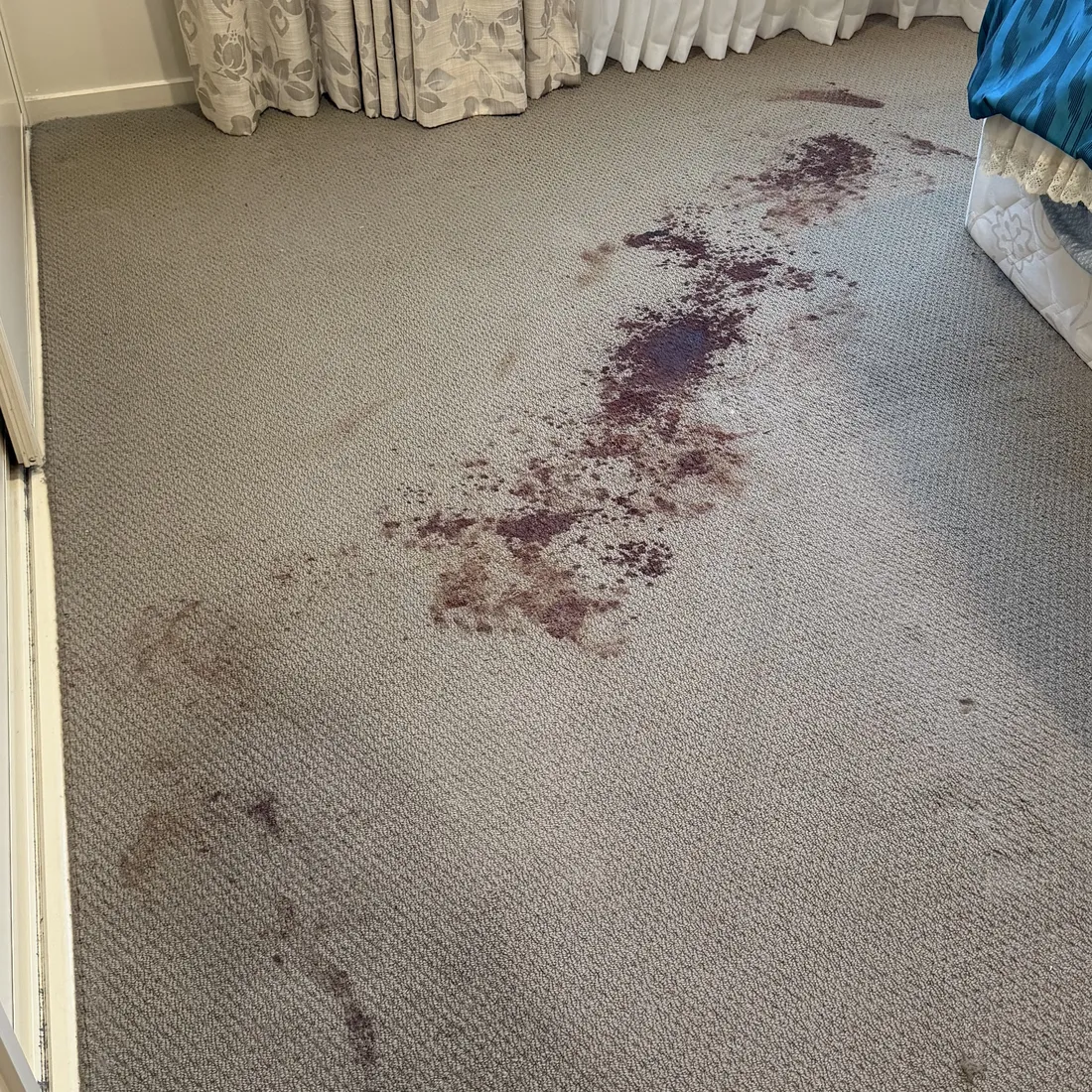
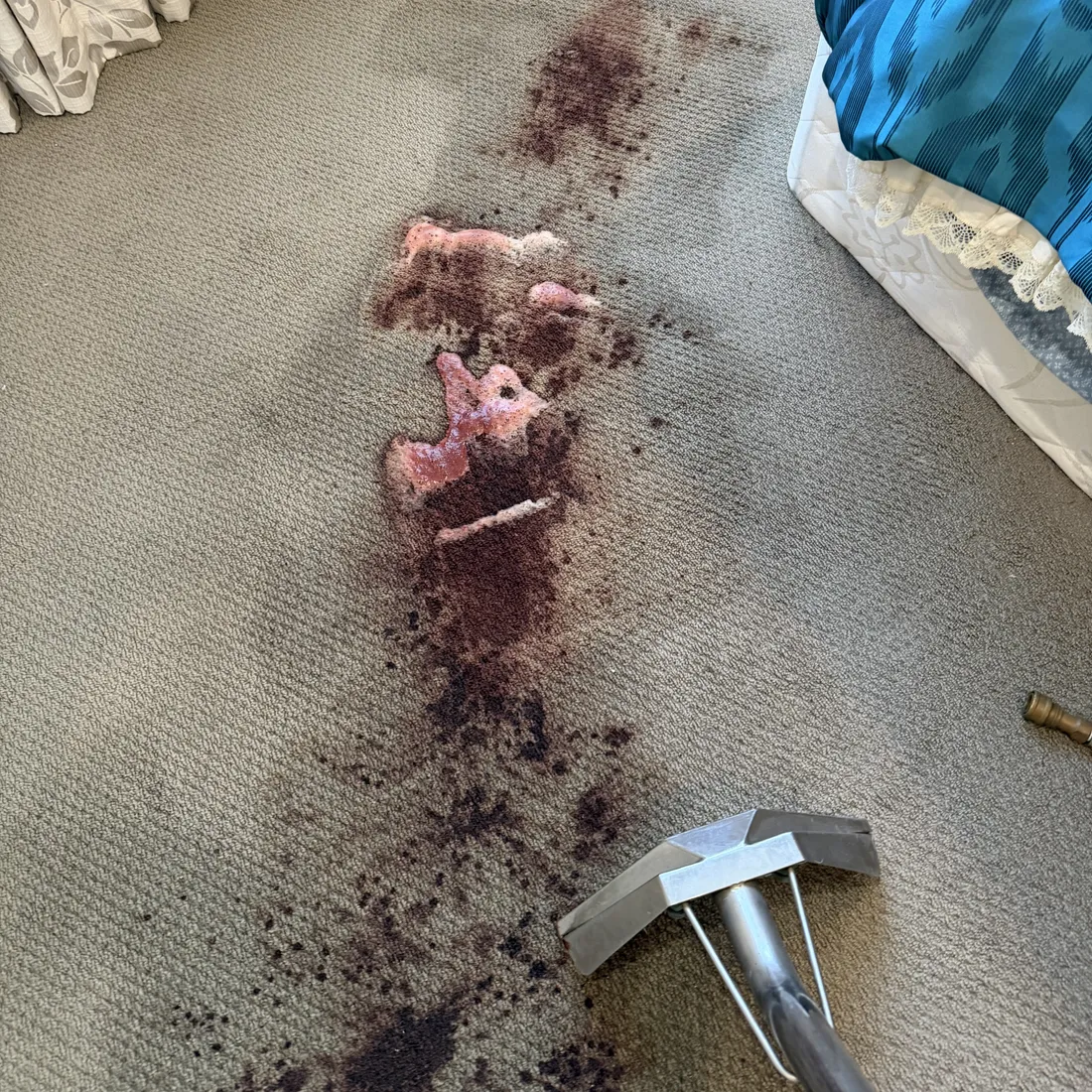
There had been an accident in the house. By the time we were called, the blood on the bedroom carpet had been there the better part of a week, and the family had been told they had two options: live with it, or replace the carpet.
The carpet is wool, and it runs through the house. Replacing it had been quoted at around $15,000. That is the number that makes this job worth writing up, because it is the number that makes people call someone like us — and it is also the number that makes a cleaner’s optimism expensive if he is wrong.
They did not want a sales pitch. They wanted to know whether it was worth trying at all. That read-it-first approach is the whole of our professional carpet stain removal service.
Why set blood on wool is genuinely hard
Blood is a protein. Wool is a protein. That single sentence is the whole difficulty, and it rules out the two things most people reach for.
Hot water sets it permanently. Heat coagulates protein — the same reason an egg white turns solid in a pan. A hot-water extraction over dried blood does not lift the stain, it cooks it into the fibre, and after that nobody is getting it out. Blood work is done on the cold side.
Enzyme cleaners eat the carpet. The protease enzymes that dissolve blood on a nylon carpet do not know the difference between the protein in the stain and the protein in a wool fibre. Used freely on wool, they damage what they are cleaning.
Strong alkalis and bleach are both out. Wool wants gentle, slightly acidic conditions; high-pH cleaners degrade and yellow it, and peroxide bleaching on a coloured wool carpet risks taking the dye with the stain.
So the job needs chemistry chosen for the stain and the fibre at once, applied cold, with as little moisture as the work allows. That is a narrower path than it sounds, and it is the reason a general carpet clean would have failed here — or made it permanent.
What we promised, which was less than they hoped
We told them plainly: we expected improvement, and we would not promise the stain would be gone. Some marking can stay for good if blood has been in the fibre long enough, and a week is long enough to be a real question.
We also booked in something most people would not mention until it went wrong. Our assessment was that this could take two or three visits in total — not to finish the cleaning, but to deal with what the drying might bring back. The owners were not prepared to have the carpet lifted so the underlay could be checked, and with that much blood there is a real chance some had passed through the backing. Nobody can see how much. What is under there only announces itself as the carpet dries.
We said all of that before we started rather than after, because a mark that reappears three days later is exactly the moment a customer decides a cleaner has lied to them.
Because the contamination was biological, the work was done in PPE, and the affected area was treated for decontamination before any stain work began. We are not a trauma remediation firm and we do not present ourselves as one — this was a carpet cleaned carefully, by people taking the sensible precautions.
What actually happened
The first round took out the great majority of it — call it 80 to 90 per cent. At that point the temptation is to keep going and chase the rest. We stopped instead, because the only way to chase it is more moisture, and more moisture into a wool carpet with blood already in the backing is how you turn a stain into a permanent problem.
So we dried the floor down, and went again.
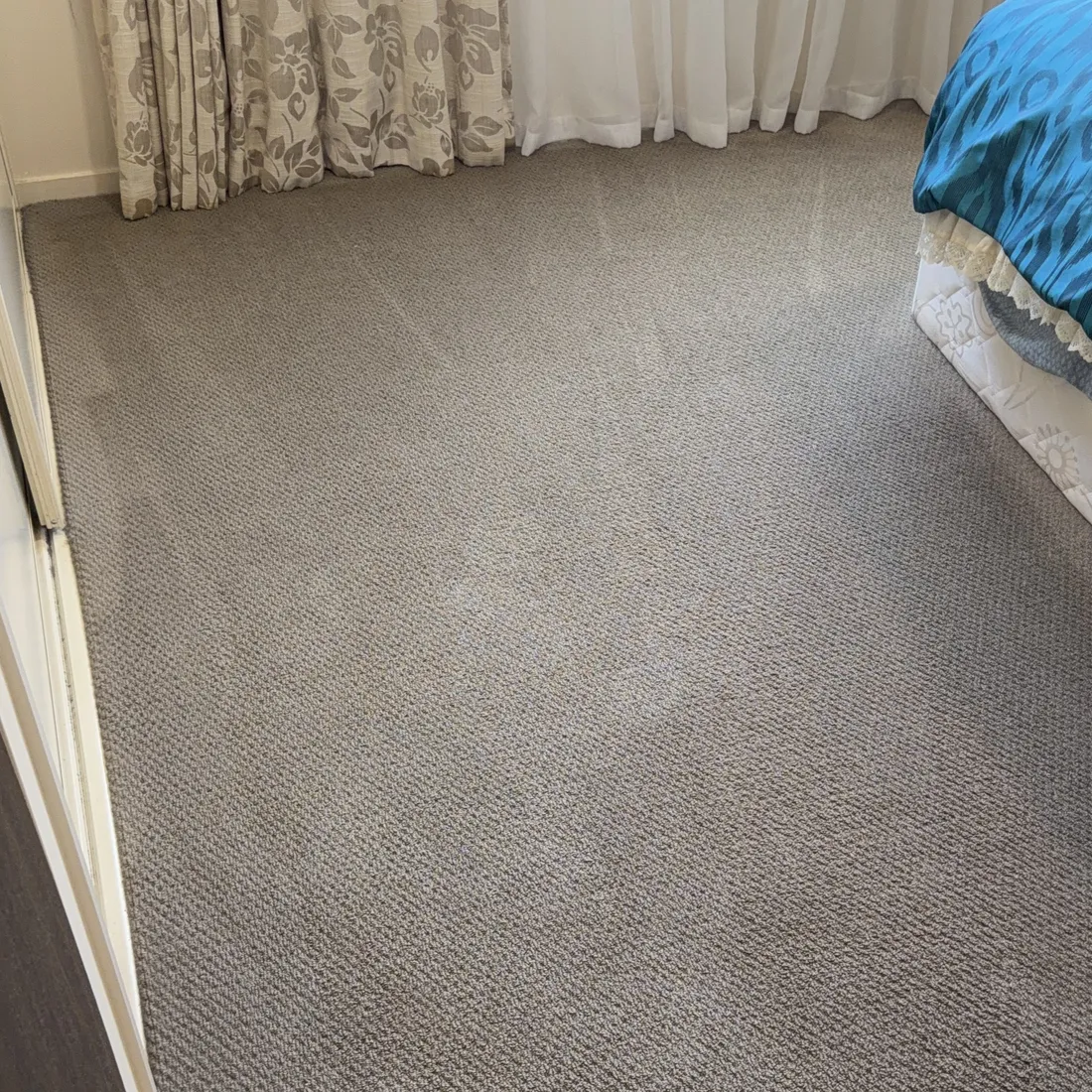
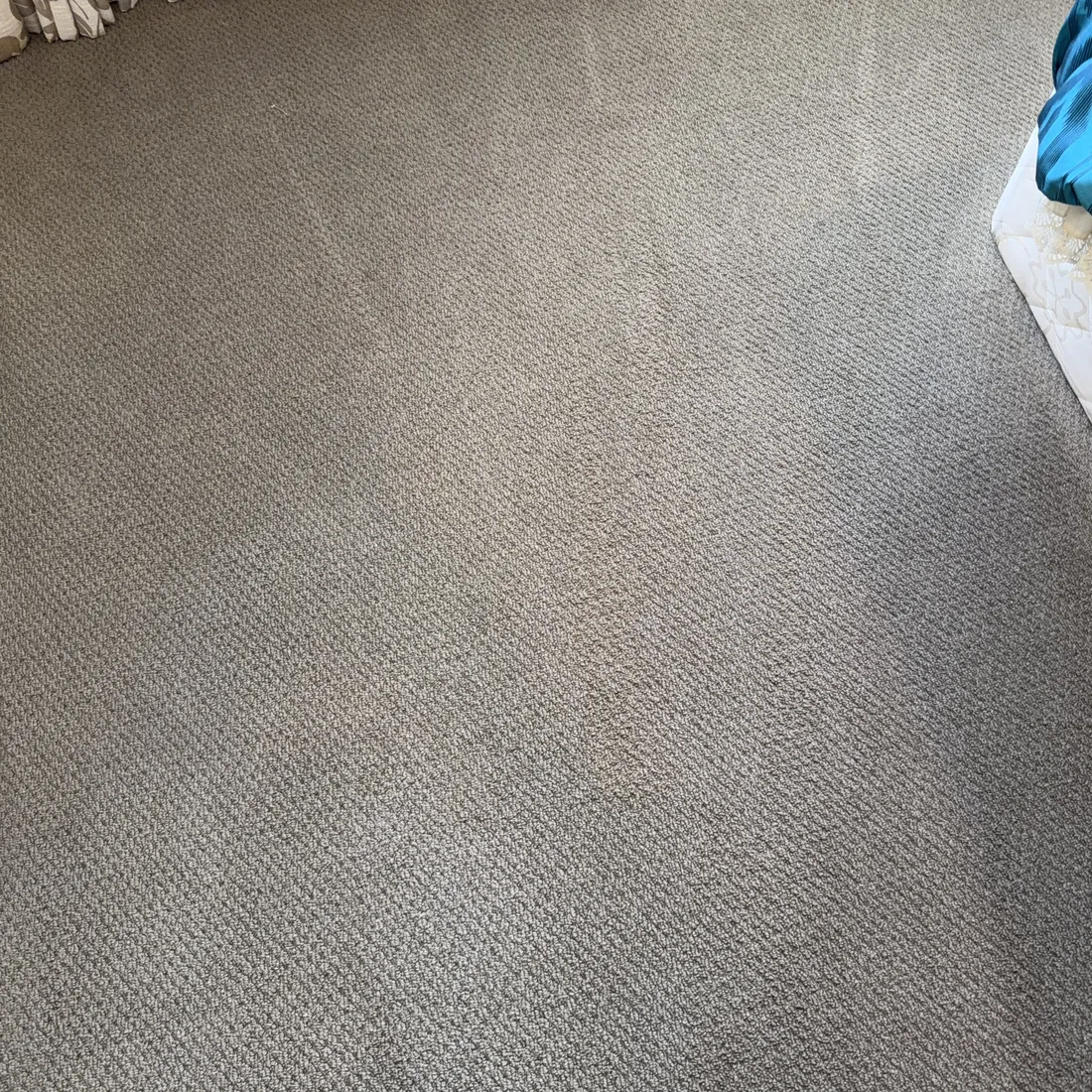
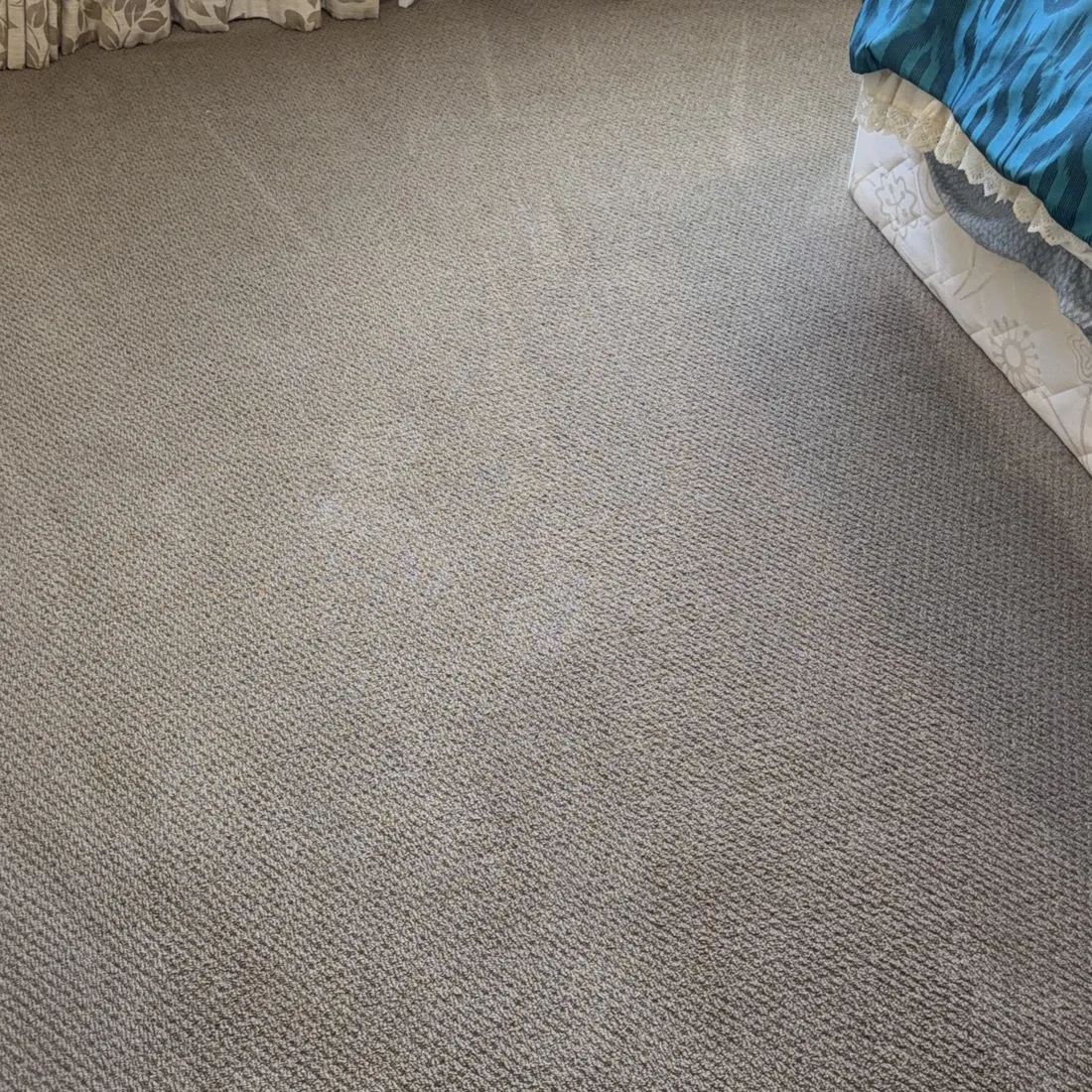
The second round took the rest. No visible stain, on a floor that had been quoted for replacement — and all of it inside a single visit, which is faster than we told them to expect. We forecast worse on purpose. The alternative is promising a result you cannot control on a fibre that punishes mistakes.
The part most people would leave out
The cleaning is finished. The job might not be.
We do not know how much blood went past the backing, and we could not find out without lifting the carpet, which the owners did not want. If a meaningful amount is down there, two things can happen as the floor dries out:
Wicking. Whatever is in the backing or the underlay travels back up the fibres with the moisture and re-appears at the surface — usually a faint shadow of the original rather than the original, and usually within the first week or two.
Browning. Wool and the natural backings under it can pull their own colour up with the water, so an area that has been worked hard and dried slowly comes back tan rather than stained. It is a different problem with a different fix, and it is one of the reasons we dry properly rather than fast.
Either might happen here. Either might not. The only thing that settles it is letting the floor dry and looking. That is what the two-to-three-visit estimate was always for — not the cleaning, which is done, but the follow-up if the drying brings something back. If it does, we come back and treat it.
That is not a disclaimer protecting us. It is the honest position on a floor we were not allowed to look underneath, and the family deserved it while they were still pleased rather than three weeks later.
Replace, or rescue?
For this floor, rescue — comfortably. A wool carpet through a whole house is a serious asset, and the cost of finding out whether it can be saved is a small fraction of the cost of assuming it cannot.
But the honest version has a limit on it. Fresh blood is far easier than week-old blood, and week-old blood is far easier than blood that someone has already gone at with hot water or a supermarket spot cleaner. If it has been heat-set, the answer changes and we will tell you so. The worst outcome on a carpet like this is not a stain that stays — it is a stain that was removable until somebody made it permanent trying.
If you are staring at something like this and deciding whether to phone a cleaner or a carpet layer, phone the cleaner first. It is the cheaper question to ask.